
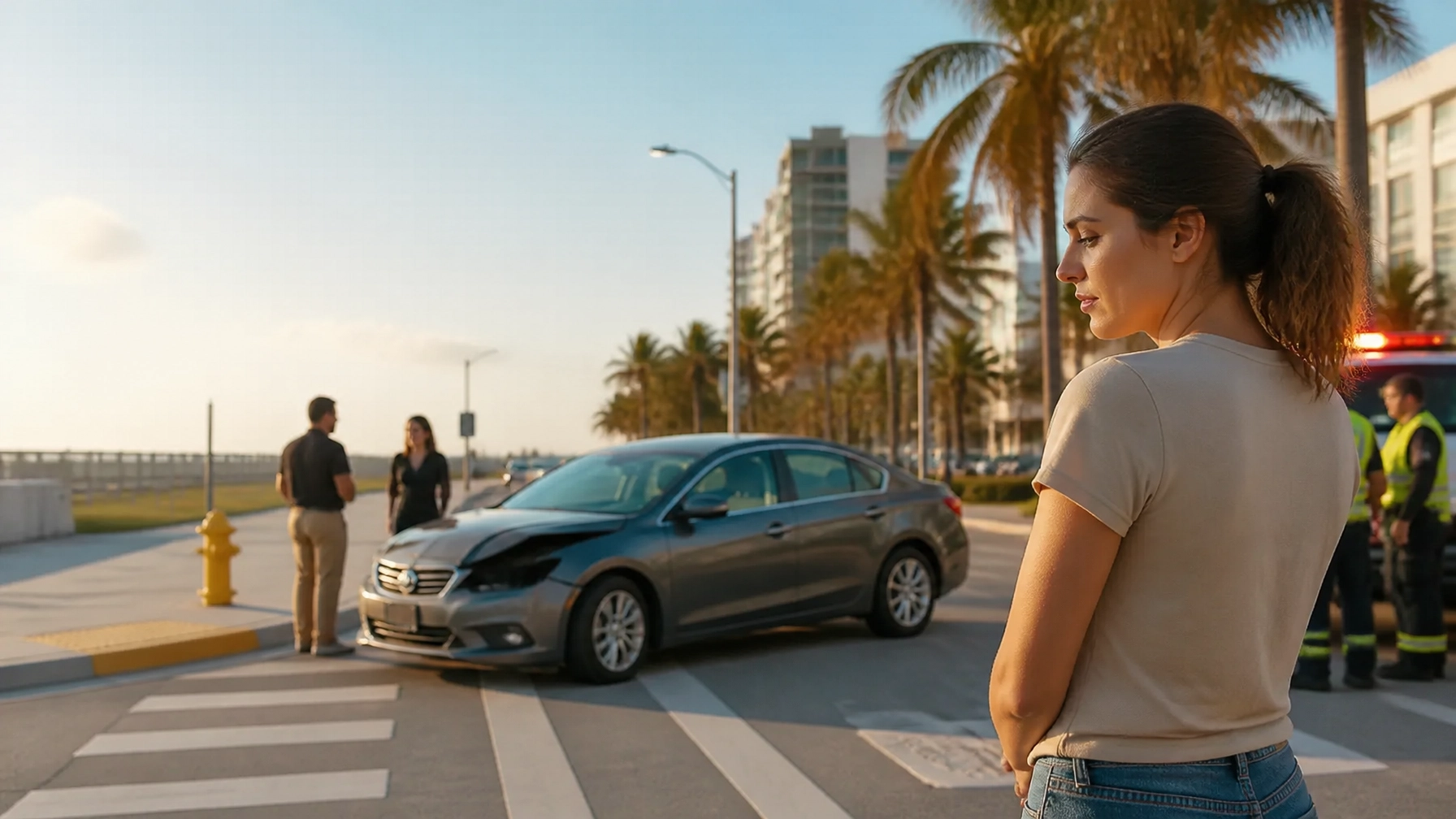
Being hit by a car can leave you with serious injuries, unexpected medical bills, and uncertainty about what to do next. Miami’s busy intersections, multilane roads, parking areas, and frequent rideshare traffic create many situations in which pedestrians are vulnerable.
If a driver’s negligence caused your injuries, you may have the right to pursue compensation. However, insurance companies may question what happened, argue that you were partly responsible, or offer less than your claim is worth. Understanding your rights and taking the right steps early can help protect your health and potential case.
Our Miami pedestrian accident lawyer team explains what you should know after being struck by a vehicle.
What should you do immediately after being hit by a car?
Your health and safety come first. If you are physically able, take these steps after a pedestrian accident:
- Call 911. Ask for police and emergency medical assistance. A police report can provide important information about the location, drivers, witnesses, traffic controls, and apparent causes of the collision.
- Remain at the scene. Do not leave unless emergency personnel transport you for treatment or the scene is unsafe.
- Avoid unnecessary movement. If you may have a neck, back, or spinal injury, wait for paramedics unless remaining in place creates an immediate danger.
- Accept medical evaluation. Some serious injuries, including concussions and internal injuries, may not produce obvious symptoms immediately.
- Gather information if you can. Obtain the driver’s name, contact information, license plate number, vehicle information, and insurance details.
- Identify witnesses. Ask people who saw the collision for their names and telephone numbers.
- Do not admit fault. Speak honestly with law enforcement, but avoid guessing, minimizing your injuries, or making statements such as “I wasn’t paying attention.”
- Contact a lawyer promptly. A Miami personal injury lawyer can advise you before you provide detailed statements or sign insurance documents.
If the driver fled, try to remember the vehicle’s color, make, model, direction of travel, and any part of the license plate. Ask nearby businesses or residents whether security cameras may have captured the collision.
What does Florida law say about pedestrian right of way?
Florida’s pedestrian rules are found primarily in Florida Statute § 316.130. The law requires pedestrians and drivers to follow traffic signals and exercise appropriate care.
Generally, drivers must yield to pedestrians crossing within a crosswalk under the circumstances described by the statute. This may include a marked crosswalk or an unmarked crosswalk at an intersection. A driver may be required to slow down or stop when a pedestrian is in danger on the portion of the roadway where the vehicle is traveling.
Pedestrians also have legal responsibilities. For example, a pedestrian generally must yield to vehicles when crossing outside a marked or unmarked crosswalk. A pedestrian may not suddenly leave a curb and enter the path of a vehicle that is so close the driver cannot reasonably yield. Pedestrians must also follow applicable “Walk” and “Don’t Walk” signals.
Right of way is important, but it does not decide every case by itself. The facts may show that a driver was speeding, distracted, impaired, turning without looking, or failing to maintain a proper lookout. Florida law also requires every driver to exercise due care to avoid colliding with pedestrians.
How does driver negligence cause pedestrian accidents?
A driver may be legally responsible when unreasonable conduct causes a collision. Common examples include:
- Texting, using a navigation application, or looking away from the road
- Speeding through an intersection or residential area
- Failing to yield at a crosswalk
- Running a red light or stop sign
- Turning without checking for pedestrians
- Driving under the influence of alcohol or drugs
- Backing out of a driveway, parking space, or garage without looking
- Failing to use appropriate caution in rain, darkness, or heavy traffic
- Driving aggressively or failing to keep a safe lookout
In some cases, more than one party may contribute to the crash. A delivery company, rideshare driver, vehicle owner, or governmental entity responsible for a dangerous roadway condition may need to be investigated depending on the circumstances.
What evidence should you preserve after a Miami pedestrian accident?
Evidence can disappear quickly. Skid marks may be removed, vehicles may be repaired, surveillance footage may be overwritten, and witnesses’ memories may fade. If your condition permits, or if a family member can help, preserve the following:
- Photographs of your injuries and the clothing and shoes you were wearing
- Photographs or video of the vehicle, vehicle damage, road, crosswalk, traffic signal, signs, and lighting
- The driver’s insurance and contact information
- Names and contact details for witnesses
- The police report and incident number
- Emergency room records, diagnostic imaging, prescriptions, and medical bills
- Records showing missed work or reduced income
- Photographs of damaged phones, bags, glasses, or other personal property
- Notes describing your pain, limitations, symptoms, and treatment
- Information about nearby businesses, homes, traffic cameras, or vehicle cameras

Do not wash or discard clothing that may contain evidence of the impact. Do not post photographs, accusations, or details about the accident on social media. Insurance companies may review public posts and attempt to use them to challenge your injuries or account of the collision.
What injuries are common when a pedestrian is hit?
A pedestrian has little protection against the weight and force of a motor vehicle. Even a collision at a relatively low speed can result in substantial harm. Common injuries include:
- Traumatic brain injuries and concussions
- Skull and facial fractures
- Spinal cord injuries and back or neck damage
- Broken legs, arms, hips, ribs, or pelvis
- Torn ligaments and other soft-tissue injuries
- Internal bleeding or organ damage
- Road rash, lacerations, and scarring
- Nerve damage
- Post-traumatic stress, anxiety, depression, and sleep problems
Some symptoms appear hours or days later. Seek medical attention promptly and follow your provider’s instructions. Gaps in treatment can affect your recovery and give an insurer an argument that your injuries were unrelated or less serious than claimed.

How do Florida PIP benefits apply to pedestrians?
Florida’s personal injury protection system can be confusing after a pedestrian accident. Under Florida Statute § 627.736, PIP coverage may apply to a person struck by a motor vehicle while not occupying a vehicle, subject to the statute, residency requirements, available policies, and policy terms.
Depending on your circumstances, coverage may involve:
- Your own Florida automobile policy
- A policy covering a relative who lives in your household
- The insurance policy covering the vehicle that struck you
- Other available insurance coverage identified during the claim investigation
Florida PIP generally provides up to $10,000 in medical and disability benefits, subject to the applicable requirements and limits. It typically pays 80% of reasonable, necessary medical expenses and 60% of lost gross income, within policy limits. The law generally requires initial medical services within 14 days of the crash for PIP medical benefits.
PIP is not the same as a full personal injury claim. It may not cover all medical expenses, future treatment, lost earning capacity, property damage, or pain and suffering. Notify the appropriate insurer promptly, but do not provide a recorded statement or sign a broad release before understanding your rights.
Can you recover compensation if you were partly at fault?
Yes, potentially. Florida applies a modified comparative fault rule under Florida Statute § 768.81. If you are found partly responsible, your compensation may be reduced by your percentage of fault. However, a claimant who is found more than 50% at fault generally cannot recover damages.
For example, if your total damages are $100,000 and you are found 20% responsible, your recovery could be reduced to $80,000. An insurer may argue that you crossed outside a crosswalk, ignored a signal, used your phone, or was difficult to see. Those arguments must be evaluated against the driver’s conduct and all available evidence.
A partial-fault allegation does not automatically mean you have no case. It is one reason early evidence preservation and legal guidance are important.
What compensation may be available after a pedestrian accident?
Depending on the facts and the severity of your injuries, a claim may seek compensation for:
- Medical treatment and related expenses
- Future medical care and rehabilitation
- Lost wages and reduced earning capacity
- Physical pain and emotional distress
- Permanent impairment, disfigurement, or scarring
- Loss of enjoyment of life
- Damaged personal property
- Wrongful death damages when a pedestrian dies from the collision
Florida’s general deadline for many negligence-based personal injury lawsuits is addressed in Florida Statute § 95.11. The specific deadline may depend on the date of the accident, the parties involved, and the legal claims available. Waiting can also make it harder to preserve video, witness testimony, and physical evidence.
How can a Miami personal injury attorney help?
After a serious pedestrian accident, you should be focused on treatment and recovery: not negotiating with multiple insurance companies. Our firm can investigate how the collision occurred, collect available evidence, review the crash report, identify applicable PIP and liability coverage, and address arguments that you caused or worsened your injuries.
We can also document your medical expenses, lost income, limitations, and future needs. If an insurer refuses to offer fair compensation, we can pursue the claim through negotiation or litigation when appropriate.
The Law Offices of Gonzalo Funes, PA provides personalized legal guidance to injured people and families throughout Miami and Miami-Dade County. We treat our clients like family, communicate clearly, and work to protect their interests throughout the legal process.
If you or someone you love was hit by a car, contact our office for a free consultation. Call (305) 771-8858 to discuss your situation with a Miami car accident attorney and learn about your legal options.
This article provides general information and is not legal advice. Every pedestrian accident involves different facts, insurance policies, injuries, and deadlines. Do not rely on this information as a substitute for advice from a Florida-licensed attorney.