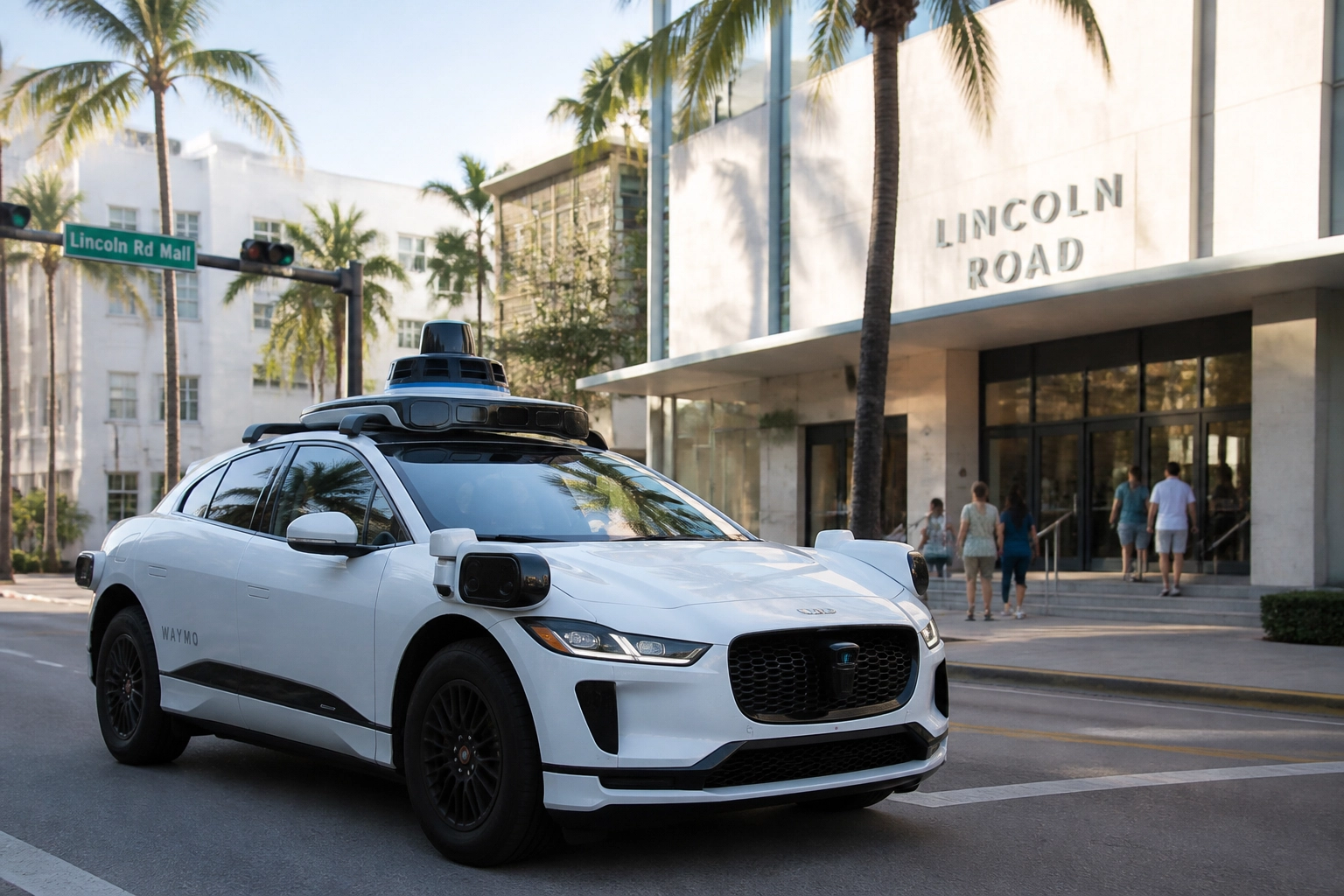
As autonomous vehicles and robotaxis like Waymo expand across South Florida, our streets are changing faster than ever. While driverless technology promises a futuristic commute, it introduces unprecedented legal and safety hazards for Miami residents. If you are struck by a vehicle with no human driver behind the wheel, the question of who is legally responsible is no longer straightforward.
When technology fails, who pays for your medical bills, your damaged vehicle, and your lost wages? At the Law Offices of Gonzalo Funes, PA, we believe you deserve absolute clarity. In this guide, we break down how liability works in autonomous vehicle accidents, the unique insurance challenges in Florida, and why securing an experienced miami car accident attorney is essential to protecting your future.
What Happens Legally When a Robotaxi Hits You in Miami?
Under Florida law (specifically Fla. Stat. §316.85), fully autonomous vehicles are permitted to operate on public roads without a human driver present. When a robotaxi operates in autonomous mode, the Automated Driving System (ADS) is legally treated as the "driver."
This means that if a Waymo vehicle runs a red light, misjudges an intersection, or strikes a pedestrian, the software and hardware system functions as the negligent party. However, unlike a traditional car accident where you simply exchange information with a human driver, an autonomous vehicle accident involves a complex web of technology providers, software developers, vehicle manufacturers, and fleet maintenance operators.
Establishing fault requires proving that a breach of duty of care occurred, whether through a software glitch, a sensor failure, or a hardware defect. Without prompt legal investigation, crucial digital logs and sensor data can be overwritten or lost.

Who Can Be Held Liable for an Autonomous Vehicle Crash?
Because an autonomous vehicle is a complex machine built by multiple corporations, liability can point toward several different entities:
- The Autonomous System Developer (e.g., Waymo / Alphabet): If the vehicle's software misinterprets traffic signals, fails to detect a pedestrian, or makes an unsafe turning maneuver, the developer can be held liable under negligence and product liability theories.
- The Vehicle Manufacturer: If a mechanical component: such as the braking system, steering assembly, or tires: fails and causes the crash, the manufacturer of the base vehicle can share liability.
- The Fleet Operator or Maintenance Provider: Autonomous fleets require rigorous routine maintenance. If a crash is caused by dirty or misaligned lidar sensors, worn brakes, or neglected repairs, the local maintenance contractor may be held responsible.
- Another Negligent Human Driver: Not every crash involving a robotaxi is the fault of the autonomous system. Many collisions occur because another human driver acts recklessly, runs a stop sign, or rear-ends the autonomous vehicle. In such cases, that human driver remains primarily at fault.
Under Florida’s modified comparative negligence system, you can recover damages only if you are 50% or less at fault for the collision. Insurance adjusters for tech conglomerates will often attempt to shift blame onto victims or other drivers. Having a seasoned miami personal injury lawyer on your side ensures that every party is held accountable.
What Insurance Coverage Applies to a Waymo Accident in Florida?
Navigating insurance after a collision can be exhausting, especially when tech companies are involved. Florida regulations mandate that fully autonomous vehicles operating on-demand networks must carry at least $1,000,000 in primary liability coverage for bodily injury and property damage, alongside mandatory Personal Injury Protection (PIP).
However, significant gaps remain. Unlike traditional commercial transport regulations in some jurisdictions, Uninsured/Underinsured Motorist (UM/UIM) coverage is not legally required for autonomous fleets. If another negligent, uninsured driver collides with your Waymo: or hits your vehicle while you are driving near one: you may face a severe coverage gap.
If your initial medical expenses exceed your PIP limits, you need to understand who pays my medical bills after an auto accident. Relying solely on the insurance company's initial offer can leave you paying out of pocket for long-term rehabilitation and compensatory damages for pain and suffering.

What Are Your Rights as a Passenger, Driver, or Pedestrian?
Your legal options depend heavily on your role in the accident:
1. You Were a Passenger in the Waymo
If you trusted a robotaxi to get you to your destination safely and a software error or sudden malfunction caused a crash, you may file a claim against Waymo’s $1,000,000 primary liability policy. You do not bear responsibility for the vehicle's operation.
2. You Were Driving Another Vehicle
If a driverless vehicle struck your car due to an algorithmic error or sudden stop, you have the right to pursue compensation for vehicle repairs, medical treatment, and lost income.
3. You Were a Pedestrian or Cyclist
Pedestrians are uniquely vulnerable to sensor blind spots and perception errors in autonomous vehicles. If a robotaxi failed to detect you in a crosswalk, the resulting injuries can be life-altering.
In all of these scenarios, waiting to take action can jeopardize your case. Florida’s statute of limitations generally gives you two years from the date of the accident to file a personal injury lawsuit, but critical digital evidence must be secured immediately.

How Our Firm Can Protect You
Fighting a multi-billion-dollar technology corporation and their team of corporate defense lawyers is not a battle you should fight alone. Insurance adjusters and tech representatives are trained to minimize payouts and dispute technical liability from day one.
At the Law Offices of Gonzalo Funes, PA, we treat every client like family. We investigate every angle of your accident: securing vehicle event data recorder (EDR) logs, analyzing software telemetry, consulting accident reconstruction experts, and dealing directly with aggressive insurance carriers.
If you've been injured by a delivery driver or rideshare vehicle, you may also want to read our guide on When an Amazon Driver Hits You — the same principles of corporate liability apply. And for more on how autonomous vehicles are changing the legal landscape, see our post on Tesla Cybercab Accidents in Miami and Rideshare Accidents in Miami.
Do not let corporate complexity deny you the justice and financial recovery you deserve. If you or a loved one has been injured in an autonomous vehicle accident in Miami, contact us today for a free, confidential consultation. Let our dedicated legal team stand up for your rights and guide you forward.