
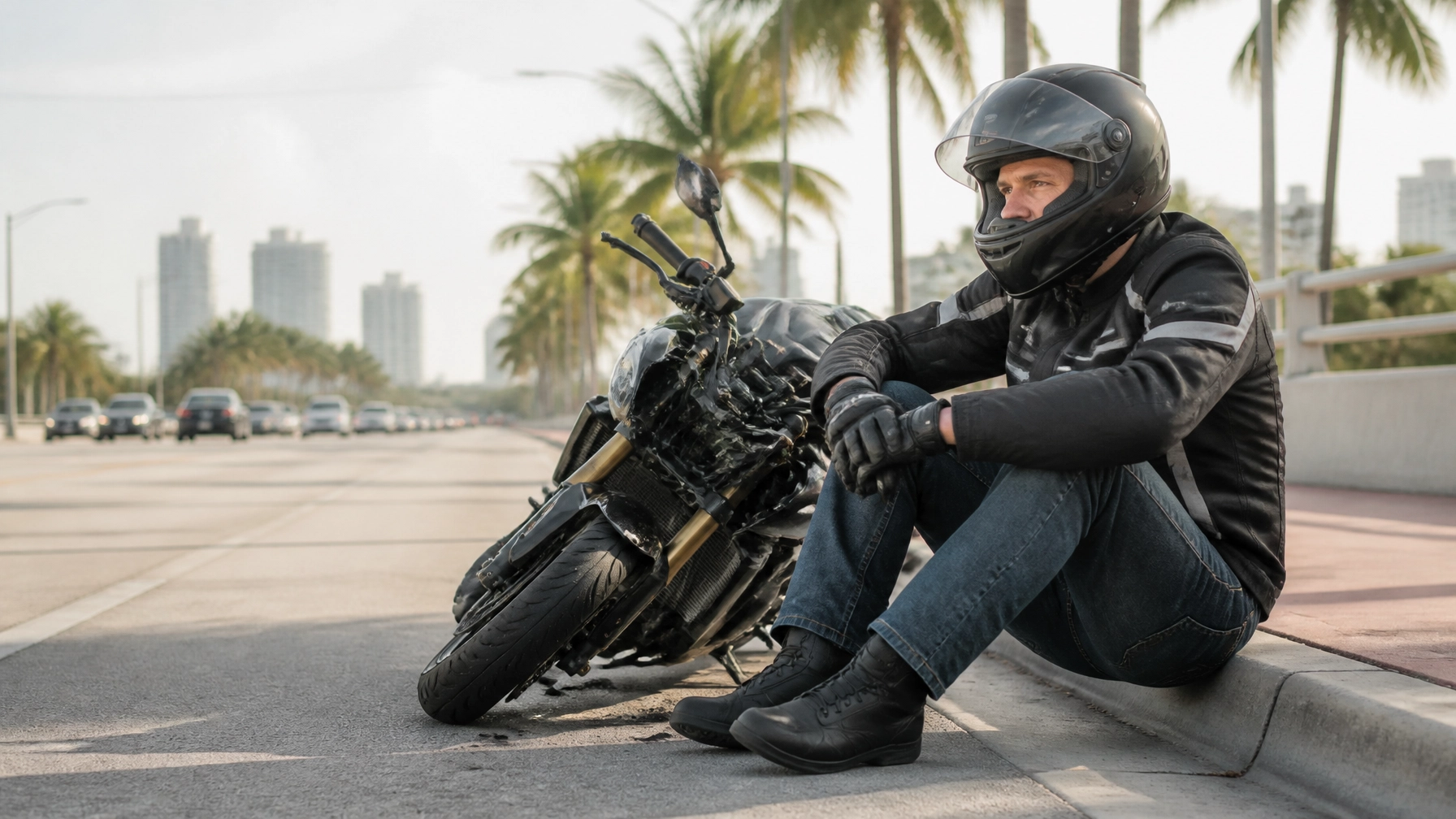
A motorcycle crash can change your life in seconds. You may be dealing with broken bones, road rash, a traumatic brain injury, spinal damage, lost income, and medical bills that continue to grow. At the same time, an insurance adjuster may already be asking questions or suggesting that the collision was partly your fault.
The steps you take after the crash can affect the strength and value of your injury claim. Motorcycle cases also involve challenges that are less common in ordinary car accident claims. Insurers may rely on stereotypes about riders, dispute how the crash happened, or argue that your conduct contributed to the severity of your injuries.
Below are five common mistakes that can weaken a Florida motorcycle accident claim: and practical steps you can take to avoid them.
1. Why can delaying medical care hurt your motorcycle accident claim?
You should seek medical evaluation as soon as reasonably possible after a crash, even if you believe your injuries are minor. Some serious conditions, including concussions, internal injuries, and soft-tissue damage, may not become obvious immediately.
A delay gives the insurance company an opportunity to argue that:
- Your injuries were not caused by the motorcycle crash.
- Your condition is less serious than you claim.
- A different event caused your symptoms.
- You failed to take reasonable steps to protect your health.
What about Florida’s 14-day PIP rule?
Florida’s 14-day rule generally requires an injured person to obtain initial medical treatment within 14 days to qualify for certain Personal Injury Protection, or PIP, benefits. However, motorcycles are generally outside Florida’s no-fault PIP system. A motorcycle rider typically does not receive PIP benefits simply because the rider was struck by a car.
That does not mean medical treatment can wait. Prompt care still creates important medical records connecting your injuries to the collision. It also helps identify the full extent of your injuries before they worsen.
Florida’s PIP framework is addressed in Florida Statute § 627.736, but whether any insurance coverage applies to your medical expenses depends on your policies and the facts of the crash.
Protective checklist:
- Call 911 or obtain emergency care when necessary.
- Follow your doctor’s treatment recommendations.
- Attend follow-up appointments.
- Keep records of prescriptions, therapy, imaging, and referrals.
- Tell your providers that the injuries followed a motorcycle crash.
- Do not stop treatment simply because the insurance company has contacted you.

2. What evidence should you preserve after a motorcycle crash?
Motorcycle crashes can leave limited or disputed physical evidence. A damaged motorcycle may be moved, skid marks may disappear, and traffic-camera footage may be overwritten. If you are physically able, document the scene immediately. If you cannot, ask a trusted person to help.
Useful evidence may include:
- Photos and videos of the crash scene.
- Images of vehicle and motorcycle damage.
- Skid marks, debris, road defects, traffic signals, and lane markings.
- The other driver’s license plate and insurance information.
- Names and contact information for witnesses.
- The police or Florida Highway Patrol report.
- Your helmet, jacket, gloves, boots, and other protective gear.
- Dashcam, helmet-camera, or nearby surveillance footage.
- Medical records and photographs of visible injuries.
Do not discard or repair your helmet or riding gear before they are documented. Damage patterns may help show how the collision occurred or how your injuries developed. Keep the items in a safe location and avoid altering them.
If the motorcycle may have a mechanical defect, do not authorize repairs before the vehicle is inspected. A defective tire, brake, lighting system, or other component may create a separate product liability issue.

Protective checklist:
- Photograph the scene from multiple angles.
- Save original photos and videos.
- Write down what you remember before details fade.
- Preserve the motorcycle and all protective equipment.
- Avoid posting crash details or injury updates on social media.
- Give evidence to your attorney rather than relying only on an insurance adjuster to investigate.
3. Why should you avoid admitting fault at the scene?
After a crash, you may feel embarrassed, confused, or worried about the other driver. You might say, “I’m sorry,” or speculate that you were traveling too fast. Even an innocent statement can later be presented as an admission of fault.
You should cooperate with law enforcement and provide accurate information. However, limit your comments to what you know. Do not guess about speed, distance, visibility, or who had the right of way.
For example, instead of saying, “I must not have seen the car,” you can say, “I was traveling straight when the vehicle entered my path.” If you are unsure about a detail, say that you do not know.
You should also avoid making a recorded statement to the other driver’s insurance company before speaking with a lawyer. The adjuster may sound helpful, but the insurer’s goal is to evaluate and limit its financial exposure. A recorded statement can be taken out of context or used to challenge your claim later.
Our Miami motorcycle accident lawyer page explains why insurers may try to portray riders as reckless, even when another driver caused the collision. Clear evidence: not stereotypes: should determine responsibility.
4. Why is accepting a quick settlement often a mistake?
An early settlement offer may appear helpful when bills are arriving and you are missing work. But a quick payment may not reflect the true value of your claim.
Motorcycle injuries can require months or years of treatment. You may not yet know whether you will need surgery, long-term physical therapy, assistive equipment, or future medical care. You may also be unable to determine the full effect on your work and earning capacity.
Before accepting a settlement, you should understand whether it accounts for:
- Emergency and hospital treatment.
- Surgery, medication, and rehabilitation.
- Future medical expenses.
- Lost wages and reduced earning capacity.
- Motorcycle and personal property damage.
- Physical pain and emotional distress.
- Permanent scarring, disability, or disfigurement.
- The effect of the injury on daily activities and relationships.
Once you sign a release, you may give up the right to pursue additional compensation: even if your symptoms become more serious later. Do not sign a settlement agreement or release without understanding what rights you are surrendering.
Our Miami car accident lawyer resource provides broader information about documenting injuries, communicating with insurers, and evaluating accident claims. Many of the same insurance tactics apply to motorcycle cases, but motorcycle claims may require additional attention to rider bias, protective equipment, and the severity of injuries.
5. How can comparative fault and rider bias reduce your recovery?
Florida uses a modified comparative fault system. Under Florida Statute § 768.81, your compensation may be reduced by your percentage of responsibility. If you are found more than 50% at fault in a negligence case, you may be barred from recovering damages.
An insurer may claim that you:
- Were speeding.
- Failed to maintain a safe distance.
- Changed lanes improperly.
- Were difficult to see.
- Failed to use headlights or appropriate safety equipment.
- Were riding aggressively.
- Violated a traffic signal or right-of-way rule.
The insurer may also argue that not wearing a helmet contributed to your head injuries. Florida’s helmet requirements are addressed by Florida Statute § 316.211. Adult riders may have an exemption if they meet specific medical-insurance requirements, while riders under 21 generally must wear a helmet meeting applicable standards.
Not wearing a helmet does not automatically establish that you caused the crash. However, the insurer may argue that it increased the severity of particular injuries. Whether that argument applies depends on the facts, medical evidence, and applicable law.
Bias can make these arguments more persuasive than they should be. Some adjusters and jurors assume that motorcyclists are reckless simply because they ride. A strong claim should address the actual evidence, including traffic-camera footage, vehicle damage, witness statements, accident reconstruction, and medical documentation.
How can a Miami motorcycle accident lawyer help protect your claim?
You should not have to manage a serious injury, medical care, lost income, and an insurance investigation by yourself. At the Law Offices of Gonzalo Funes, PA, we investigate the crash, preserve evidence, evaluate available insurance coverage, and challenge efforts to shift unfair blame onto you.
We can also help determine whether your claim involves:
- A negligent driver.
- Uninsured or underinsured motorist coverage.
- A defective motorcycle component.
- A dangerous roadway condition.
- Future medical needs or diminished earning capacity.
- A claim involving permanent disability or wrongful death.
Our team provides free consultations and clear communication throughout the legal process. If you or a loved one was injured in a Miami motorcycle crash, contact the Law Offices of Gonzalo Funes, PA before giving a recorded statement or accepting a settlement. Prompt legal guidance can help protect the evidence and options you may need to pursue fair compensation.
This article provides general information and is not a substitute for legal advice. Motorcycle accident claims are fact-specific. Deadlines, insurance coverage, comparative fault, and available damages should be evaluated by a Florida attorney.


