{: style="text-align: justify;"}
A hurricane can leave you focused on immediate safety: protecting your family, stopping water from entering your home, finding temporary housing, and cleaning up debris. Insurance deadlines may be the last thing on your mind.
That delay can create a serious problem. Florida law generally gives homeowners one year from the date of loss to notify their insurer of a new or reopened property insurance claim involving hurricane or windstorm damage. The deadline used to be two years. For supplemental claims involving additional damage from the same event, the deadline is generally 18 months.
During Miami’s peak hurricane-season weeks, understanding this deadline is critical. If you wait too long to report damage, your insurer may deny the claim as untimely: even if the damage is real and your policy appears to provide coverage.
What changed about Florida’s hurricane insurance claim deadline?
Florida Statutes section 627.70132 now generally requires notice of a property insurance claim within one year after the date of loss.
Before the 2022 insurance reforms, Florida homeowners generally had:
- Two years to report a new or reopened claim.
- Three years to report a supplemental claim.
The current rules generally provide:
- One year to report a new claim or reopened claim.
- 18 months to report a supplemental claim involving additional damage from the same event.
A reopened claim is a previously closed claim that is later reopened to seek additional costs for damage already disclosed to the insurer. A supplemental claim involves additional loss or damage discovered after the insurer has adjusted the original claim or while repairs are underway.
The law can be affected by the date of loss, the policy language, and the particular history of your claim. Older storm losses may be governed by different deadlines. You should not assume that a deadline applies: or does not apply: without having your policy and claim history reviewed.
When does the one-year clock begin?
For hurricane damage, the date of loss is generally tied to the date the hurricane made landfall. It is not necessarily the day you first noticed a leak, discovered mold, or received a contractor’s estimate.
This distinction matters because hurricane damage is not always immediately visible. Roof damage may allow water to enter gradually. Moisture can spread through insulation, ceilings, drywall, flooring, and personal property. Damage behind walls may not become apparent until weeks or months later.
Florida law also addresses other weather-related events. For certain tornadoes, windstorms, severe rain, and similar events, the date of loss may be based on when the event is verified by the National Oceanic and Atmospheric Administration.
If you are unsure when the clock started, act promptly. Waiting to resolve uncertainty can put your claim at risk.
Why do many Miami homeowners miss the deadline?
Homeowners often believe they have more time because they remember the former two-year rule. Others assume that the insurer will automatically investigate once a contractor identifies damage. Some do not realize that contacting a contractor is different from providing notice to the insurance company.
You may also delay because:
- The damage appears minor at first.
- You are waiting for a roofing or restoration company to become available.
- You are dealing with displacement, work interruptions, or family responsibilities.
- You expect the insurer to contact you after a major storm.
- You are worried that filing a claim will increase your premiums.
- You believe you cannot file until you know the full cost of repairs.
These assumptions can be dangerous. In many cases, you do not need to know the final value of the loss before reporting it. You do need to provide notice in accordance with your policy and applicable law.
A late notice can give the insurer a basis to deny the claim. Even when a claim is accepted, delays can make it harder to connect the damage to the storm and prove the full scope of your loss.
What should you do immediately after a hurricane?
Your first priority should always be safety. Do not enter an unsafe structure or climb onto a damaged roof. Once you and your family are safe, take practical steps to preserve evidence and protect the property.
1. Photograph and record the damage
Take photographs and videos of:
- Missing or damaged shingles.
- Roof openings and water intrusion.
- Ceiling, wall, flooring, and electrical damage.
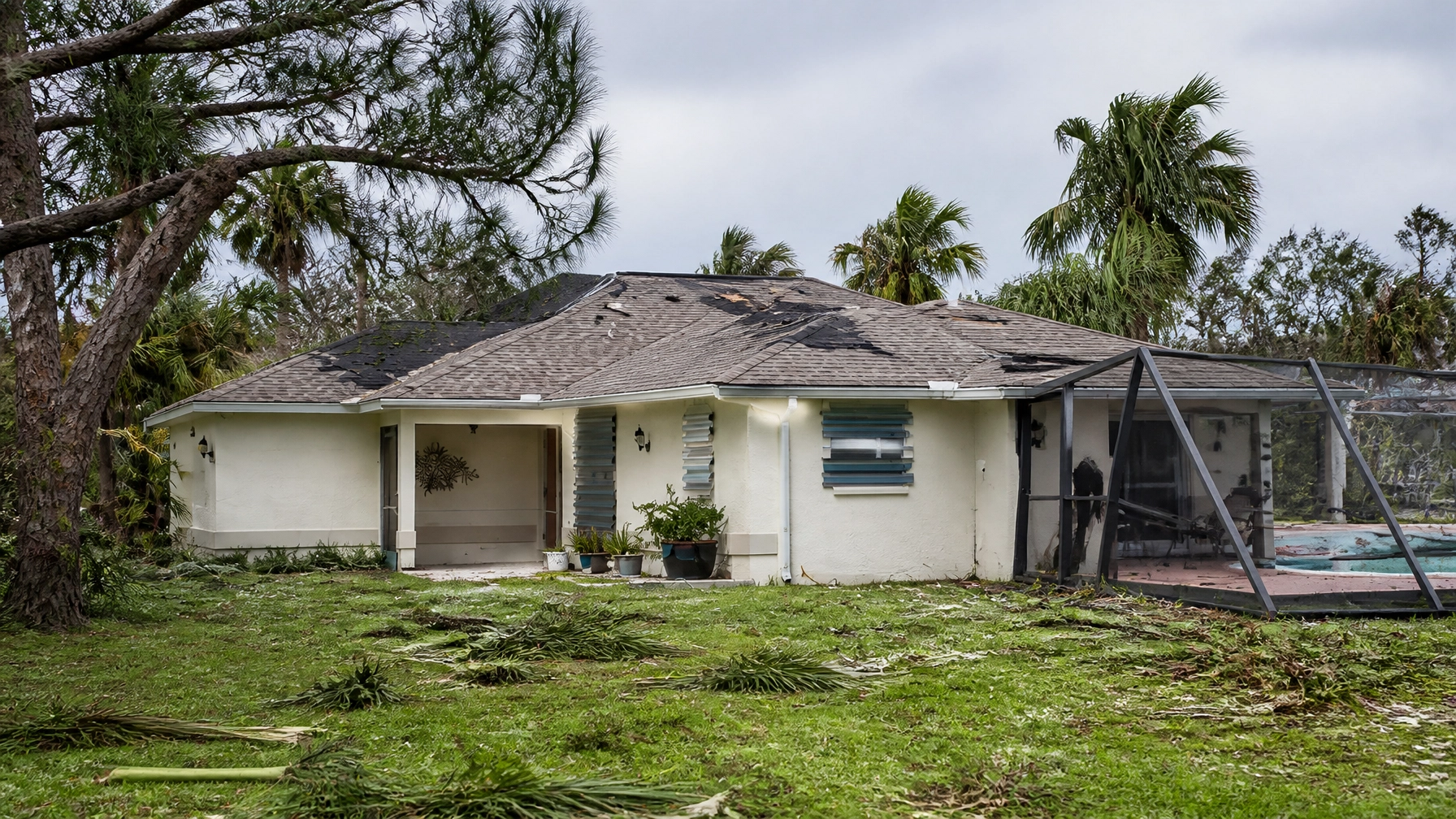
- Broken windows, doors, fences, and screened enclosures.
- Damaged appliances, furniture, electronics, and other personal property.
- Fallen trees and debris, including where they landed.
- Standing water and visible mold.
Take wide-angle photographs that show the location of the damage, along with close-up images of specific problems. Keep the original files and note when and where each photograph was taken.

2. Review your policy
Look for provisions addressing:
- Windstorm and hurricane coverage.
- Hurricane deductibles.
- Roof and ordinance-or-law coverage.
- Additional living expenses.
- Personal property.
- Water damage and flood exclusions.
- Duties after loss.
- Notice requirements.
- Proof-of-loss requirements.
A homeowners policy may cover wind-driven rain entering through a storm-created opening, while a separate flood policy may address rising water. The difference between storm damage and flood damage can be significant. Our related guide, “What Is Storm Damage vs. Flood Damage in an Insurance Claim?”, explains why identifying the source of the water matters.
3. Notify your insurer promptly
Report the loss as soon as reasonably possible and follow the notice instructions in your policy. Keep:
- The claim number.
- The date and time you reported the damage.
- The name and contact information of each representative.
- Copies of emails, letters, photographs, estimates, and forms.
- Notes about every inspection and conversation.
A telephone report may be followed by written notice or online submission, depending on your policy. Preserve confirmation that the insurer received your notice.
4. Obtain repair estimates
Get detailed estimates from qualified, licensed professionals when possible. The estimate should identify the affected areas, necessary work, materials, labor, and code-related requirements.
Be cautious when selecting contractors after a major storm. Do not sign an assignment of benefits or other unfamiliar agreement without understanding what rights you are giving away. You should also be wary of anyone who pressures you to exaggerate damage or sign documents immediately.
5. Make necessary temporary repairs: but preserve the evidence
Your policy may require you to take reasonable steps to prevent further damage. For example, you may need to place a tarp over an opening or remove standing water.
Document the condition before performing temporary work whenever it is safe to do so. Keep receipts for emergency services and materials. Avoid permanent repairs or disposal of damaged property before the insurer has had a fair opportunity to inspect, unless safety or further damage requires immediate action.
What if the insurer underpays or denies your claim?
An insurance company’s estimate is not necessarily the final measure of your loss. Disputes may involve:
- The cause of the damage.
- Whether the damage occurred during the covered storm.
- The scope of roof or structural repairs.
- Hidden water or mold damage.
- Depreciation.
- Deductibles.
- Policy exclusions.
- Building-code upgrades.
- Whether the insurer conducted a complete inspection.
A denial letter may state that the damage resulted from wear and tear, poor maintenance, flooding, or another excluded cause. In other cases, the insurer may approve part of the claim while leaving out substantial repairs.

You should review the insurer’s explanation against the policy, photographs, contractor estimates, inspection reports, and the actual condition of the property. Do not assume that accepting an initial payment means you must accept the insurer’s valuation of the entire claim. Do not sign a release or final settlement without understanding its effect on your rights.
How can a property damage lawyer help with a hurricane claim?
If you searched for “property damage lawyer Florida,” you may be trying to determine whether an insurer’s decision is fair. An attorney can help by:
- Reviewing your insurance policy and the applicable deadlines.
- Determining whether notice was timely.
- Evaluating the insurer’s inspection and estimate.
- Identifying overlooked or improperly valued damage.
- Coordinating evidence from contractors, engineers, and other professionals.
- Preparing documentation supporting the full value of the loss.
- Communicating with the insurance company.
- Challenging an improper denial or underpayment.
- Advising you before you sign a release, proof of loss, or settlement agreement.
- Explaining available dispute-resolution or litigation options.
Our Miami property damage lawyers represent homeowners, associations, and businesses in insurance disputes. We also assist with hurricane damage claims in Miami and can help evaluate whether a claim may involve improper handling or bad faith.
Legal deadlines can be separate from the deadline to notify the insurer. Florida law also contains limitations periods for lawsuits involving property insurance contracts. The applicable period can depend on the date of loss, policy terms, legislative changes, and claim history. Prompt legal advice helps protect you from relying on the wrong deadline.
What should you do if your claim was already denied or underpaid?
Do not ignore the denial letter or assume the matter is closed. Gather your policy, claim correspondence, photographs, estimates, receipts, inspection reports, and payment information. Write down what happened and when.
Then seek a prompt review. A lawyer may identify missing evidence, an incomplete adjustment, an incorrect application of an exclusion, or a valuation that does not account for necessary repairs. The sooner the dispute is evaluated, the more effectively evidence can be preserved.
You can learn more about common claim problems in “10 Reasons Your Florida Property Damage Claim Isn’t Working and How to Fix It.”
How can you protect your home insurance rights this hurricane season?
Do not wait until the one-year anniversary of a storm. After any hurricane or major windstorm:
- Make sure your family is safe.
- Photograph and record the damage.
- Review your policy.
- Notify your insurer promptly.
- Protect the property from additional damage.
- Keep receipts and copies of every communication.
- Obtain detailed repair estimates.
- Contact a lawyer before signing a release or accepting a final settlement.
The Law Offices of Gonzalo Funes, PA offers free consultations for homeowners dealing with denied, delayed, or underpaid property insurance claims. We provide clear guidance, personalized attention, and determined advocacy throughout the process.
Contact our firm for a free consultation about your Florida hurricane damage claim.
This article provides general information and is not legal advice. Insurance deadlines and available remedies depend on the facts of your loss, your policy, and applicable Florida law. Speak with a qualified attorney about your specific situation.