
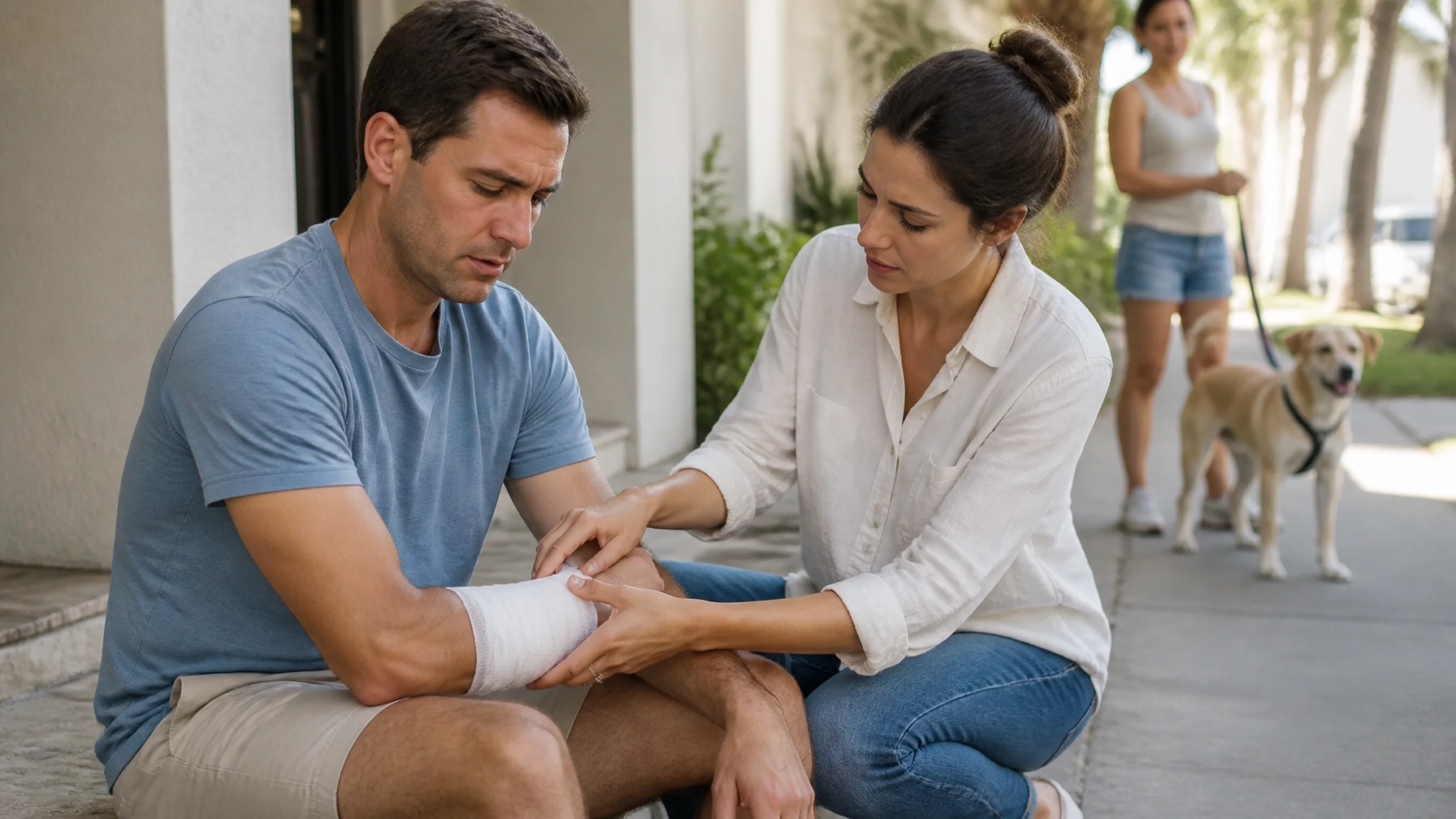
A dog bite can happen in seconds. You may be visiting a neighbor, walking through your community, delivering a package, or simply passing a home when a dog suddenly attacks. Even a bite that appears small can cause infection, nerve damage, scarring, emotional distress, and costly medical treatment.
You may also be wondering: Who pays for your injuries? Does the dog owner have to pay even if the dog never acted aggressively before? What if there was a warning sign?
Florida law provides important protections for people injured by dog bites. However, exceptions and defenses can affect your claim. Understanding what to do after the attack can help protect your health and your ability to seek compensation.
What does Florida’s dog bite law say?
Under Florida Statute § 767.04, a dog owner is generally liable when the dog bites someone who is:
- In a public place; or
- Lawfully on private property, including the owner’s property.
This rule applies regardless of whether the dog had shown vicious behavior before or whether the owner knew the dog could be dangerous. This is commonly called strict liability. In other words, you generally do not have to prove that the owner knew about a prior attack or failed to control a dog with a known history of aggression.
The circumstances still matter. Florida law recognizes defenses involving trespassing, provocation, warning signs, and the injured person’s own negligence. An experienced dog bite lawyer in Miami can examine the facts before an insurance company attempts to shift blame to you.
Does the dog have to be known as dangerous?
No. A prior bite or history of aggression is not required for a claim under Florida’s dog bite statute.
A friendly family pet can still create legal responsibility if it bites a person who was lawfully present. The owner’s lack of knowledge about the dog’s prior behavior does not automatically eliminate liability.
This does not mean every dog-related injury is handled in exactly the same way. Florida’s strict liability statute focuses on bites. If a dog knocks you down, causes you to fall, or chases you into traffic without biting you, other legal theories: such as negligence or premises liability: may apply.
These cases can overlap with the same safety concerns involved in other unsafe-property claims. For more information about proving responsibility when a property condition causes an injury, review our Miami slip and fall and premises liability resources.
What exceptions can reduce or defeat a dog bite claim?
Were you trespassing?
Florida’s strict liability rule generally applies when you were lawfully on private property. You may be considered lawfully present if you had an express or implied invitation, such as visiting a neighbor, attending a gathering, or approaching a home for an ordinary purpose.
A person who was trespassing may not receive the same protection under § 767.04. However, the full circumstances still matter. Questions may include whether the property was clearly marked, whether you had permission to be there, and whether the owner’s conduct created a separate negligence claim.
Did you provoke the dog?
Provocation can affect your recovery. Teasing, striking, cornering, or intentionally disturbing a dog may be considered negligence that contributed to the attack.
Florida follows comparative negligence principles. If you are found partly responsible, your compensation may be reduced by your percentage of fault. Provocation does not automatically eliminate every claim, but it can become a significant issue during insurance negotiations or litigation.
Do not assume that an insurer’s accusation is correct. Insurance companies may describe ordinary conduct: such as attempting to protect a child or move away from a dog: as provocation. The evidence and context matter.
Was there a “Bad Dog” sign?
Florida law recognizes a limited warning-sign defense. An owner may avoid statutory liability in some cases if a prominently displayed, easily readable sign includes the words “Bad Dog.”
The defense has important limits. It generally does not apply when:
- The injured person was under six years old; or
- The owner’s negligent act or omission contributed to the injury.
The location, visibility, and wording of the sign can also matter. A small, obscured, or poorly placed sign may not provide the protection the owner claims.
What should you do immediately after a dog bite?
Your first priority is medical care. Dog bites can damage tendons, nerves, and joints. They can also introduce bacteria that cause serious infection. Seek prompt medical attention even if the wound appears minor. Call 911 for severe bleeding, deep wounds, facial injuries, or other emergencies.
You should also take the following steps:
- Ask about the dog’s rabies vaccination status. Obtain the owner’s name, address, telephone number, and insurance information if possible. Do not place yourself at further risk to obtain it.
- Photograph your injuries. Take clear photographs as soon as reasonably possible and continue documenting bruising, swelling, stitches, scarring, or changes during treatment.
- Document the location. Photograph the gate, fence, leash, warning signs, entrance, and area where the bite occurred.
- Identify witnesses. Get names and contact information from anyone who saw the attack or its immediate aftermath.
- Preserve clothing and other evidence. Keep the clothing, shoes, or personal property involved in the incident.
- Follow medical instructions. Attend follow-up appointments and ask questions about infection, tetanus treatment, rabies exposure, and possible scarring.
- Avoid giving a recorded statement before obtaining legal advice. You should cooperate with appropriate investigations, but an insurer may use an unclear or incomplete statement against you.

Should you report a dog bite in Miami-Dade County?
Yes. Reporting the incident can protect public health and create an official record.
After obtaining medical care, report the bite to Miami-Dade Animal Services. You can generally contact Animal Services through 311 or 305-468-5900. Animal Services may investigate the incident and address quarantine, vaccination, or dangerous-dog concerns.
You should also follow guidance from the Florida Department of Health in Miami-Dade County. The department identifies 305-470-5660 as a contact for rabies exposure concerns. Reporting requirements and public-health procedures can change, so verify current instructions through the official county and health department websites.
Do not wait to report an incident simply because the owner promises to pay your medical bills. The dog may need to be observed, and an official report can help establish what happened.
Who can be sued after a dog bite?
The dog owner
The dog owner is usually the primary party in a Florida bite claim. The owner may be legally responsible under § 767.04 even if the dog had no prior history of aggression.
A landlord or property owner
A landlord is not automatically liable merely because the bite occurred on rental property. The strict liability statute generally applies to the dog’s owner, not every person who owns the land.
However, a landlord or property manager may face a separate negligence claim in certain circumstances. For example, liability may be possible if the landlord knew about a dangerous dog, had authority to address the risk, and failed to take reasonable steps to protect residents or visitors.
These claims depend heavily on the lease, prior complaints, notices, animal restrictions, and the landlord’s control over the property.
An insurance company
The person who pays a settlement may be the dog owner’s homeowner’s or renter’s insurance carrier. Many policies include personal liability coverage for dog bites, but coverage varies. Policies may contain exclusions involving certain dogs, prior incidents, or specific circumstances.
If the dog was formally classified as dangerous, Florida law may also require the owner to maintain liability insurance of at least $100,000 under Florida Statute § 767.12.
Do not assume that an insurer’s initial offer reflects the full value of your claim. The insurer’s goal is to resolve the claim for as little as possible. A Miami personal injury lawyer can investigate available coverage and identify every potentially responsible party.
What compensation can you recover?
Depending on the facts and severity of your injuries, a dog bite claim may include compensation for:
- Emergency treatment, hospital care, medication, and follow-up appointments;
- Tetanus treatment or rabies-related medical care;
- Surgery, physical therapy, and future medical needs;
- Lost wages and reduced earning ability;
- Physical pain and emotional distress;
- Scarring and disfigurement;
- Permanent nerve, muscle, or mobility problems; and
- Loss of enjoyment of life.
Scarring can be especially serious when a bite affects your face, hands, arms, or another visible area. The value of a claim depends on more than the size of the wound. Medical records, photographs, treatment needs, permanent limitations, and the effect on your daily life can all matter.
How long do you have to file a claim?
Florida personal injury deadlines can be strict. Many personal injury claims are subject to a two-year statute of limitations, but exceptions may apply depending on the type of claim, the injured person’s age, the defendant, and other circumstances. You can review Florida’s statute of limitations provisions, but do not rely on a general deadline to evaluate your specific case.
Waiting can make it harder to locate witnesses, preserve photographs, obtain surveillance video, confirm the dog’s vaccination status, or identify insurance coverage. Speak with a lawyer as soon as possible.

How can a Miami dog bite lawyer help?
A dog bite claim may appear straightforward, but insurers often investigate issues such as provocation, trespassing, warning signs, comparative negligence, and the extent of your injuries. We can help preserve evidence, obtain medical records, communicate with insurers, investigate insurance coverage, and pursue compensation for both current and future losses.
At the Law Offices of Gonzalo Funes, PA, we understand that a dog attack can leave you dealing with pain, fear, medical expenses, and uncertainty. We provide personalized guidance and clear communication throughout the legal process. Our firm offers free consultations, and we are prepared to advocate for your interests against insurance companies and other responsible parties.
If you or someone you love was bitten by a dog in Miami, contact our office to discuss your situation. Early legal guidance can help protect your health, your evidence, and your right to seek fair compensation.
This article provides general information and is not a substitute for legal advice. The outcome of any dog bite claim depends on the specific facts and applicable law.